
1.2 Identification Principles & Methodology
Learning bird identification, especially the vocalisations (song and calls), can seem like a daunting task. Anyone who has been out with an experienced birder, or anyone who is particularly talented in something we are not, struggles to grasp how they are picking out one song amongst the chatter of the woodland, or the road noise and other people in the park. So its worth looking at how we process information, and how we learn.
Thinking, Fast and Slow by Daniel Kahneman (2011) popularised the idea of there being two types of thought: ‘System 1’ which is instinctive, emotional and reactive; and ‘System 2’ which is more deliberate and logical. Many examples can be drawn as to what ‘system’ situations may fall into, but imagine you are in a busy room with many conversations happening, someone happens to say your name and its as if the volume is turned up on that conversation. Trying to listen in to each conversation to see if its about you through the context of what they are saying would be System 2, whereas hearing your name and tuning in is System 1.
Tristan Gooley, author of the Natural Navigator books, took this idea and framed it as fast and slow thinking:
“If we can tell we are thinking about something, it’s conscious thinking. It’s slow. If we react to something ‘without thinking about it’, then… its just using the system we don’t consciously acknowledge. This is fast thinking.”
– Wild Signs and Star Paths, Tristan Gooley (2018)
Our goal is to move the identification of a bird through seeing and/or hearing it to be ‘fast thinking’, where we aren’t consciously paying attention to the colour of the legs or the pattern of the notes in a song to later compare with a field guide; but instead we instinctively know what it is we have heard.
As an example: You hear a bird singing, it isn’t too high pitched, and lasts a few seconds. You immediately think Blackbird (this is our fast thinking), but you aren’t 100% sure. So you make some notes in your field notebook, and compare it back to the last time you heard a Blackbird – that time you managed to see it singing. The song you heard today didn’t have the same high and low notes, it was fairly even in pitch. Back at home you get out a field guide, and find out that a likely species to compare blackbird with is Mistle Thrush. And your fast thinking was right, it was almost a Blackbird but not quite, it was in fact a Mistle Thrush!
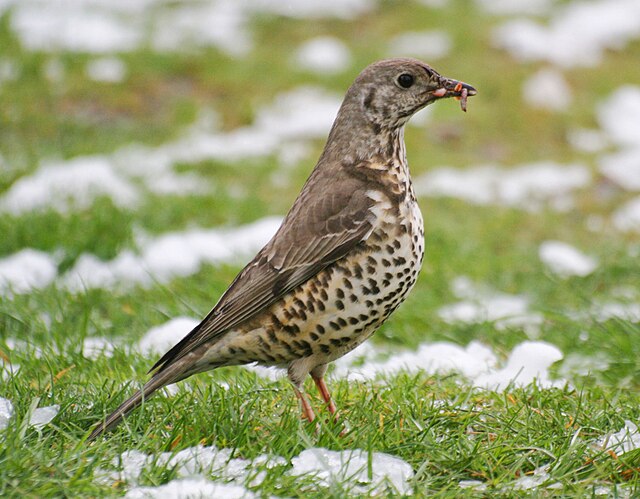
This is the process we will go through learning bird species, it won’t always be as involved as this, or sometimes you’ll be stumped as to what you have seen. That’s okay, it’s just part of the process.
Baseline Species
The ten bird species presented in this course have been chosen to act as diagnostic baselines for our learning. They are common and widespread species found in the UK, which will allow you to easily spend time out in the field making observations, to move your ability to identify them from ‘slow thinking’ to ‘fast thinking’.
Why do we need to get out in the field?
Well, the birds are out there! This online course, and field guides are useful resources to learn what to expect, but not all of these birds are going to be found everywhere. It is important to learn what birds to expect in an environment, and specifically where within that environment (low to the ground, in the tree canopy, dense bushes, etc.). This will add to our framework of knowledge, to intuitively exclude species based on location or time of year, narrowing down towards a positive identification.
We also learn better when we are engaging one or more senses. It is better to see a bird singing, than just to hear it. We are naturally a visual species, it’s how our brain is practiced at taking in new information, so if we can join-up what we are hearing with what we are seeing our learning process will be more efficient. Beyond this our other senses, even if we aren’t consciously using them will ‘fill out the picture’, contributing to solidifying an observation in our memory.
The more time we spend observing the more points of reference we create to join-up our learning, so when you see a fleeting glimpse of a small bird flying away with white tail sides, you know its likely to be a Chaffinch.
Specific Language
Throughout the course there will be terminology used. This is important because using specific language to describe something creates a point of reference we can compare against. In your learning try to be descriptive – is it white or is it a pale white covering the belly but not the face? It also allows us to communicate and describe accurately. This will be discussed more throughout the lesson for each visual identification and vocalisations.
The Field Notebook
The primary way we are going to structure and support learning bird identification is through keeping a Field Notebook. This is a record of what you have seen, and where you saw it. It is also the key tool in improving your bird identification skills, as it is where you can make records of what you have seen but cannot identify.
Any notebook will do, but one that you can keep to hand and won’t avoid taking out due to its size or being awkward to use recommended, no point having it if it isn’t with you! You will want your choice to have a bit of weather resistance, as it will have a tough life if you are using it properly. My preference is for Rite in the Rain spiral bound notebooks, but you may have your own preference. Pencil is the tool of choice for making your records, especially when it comes to drawing, it also doesn’t have the risk of running if it gets wet.
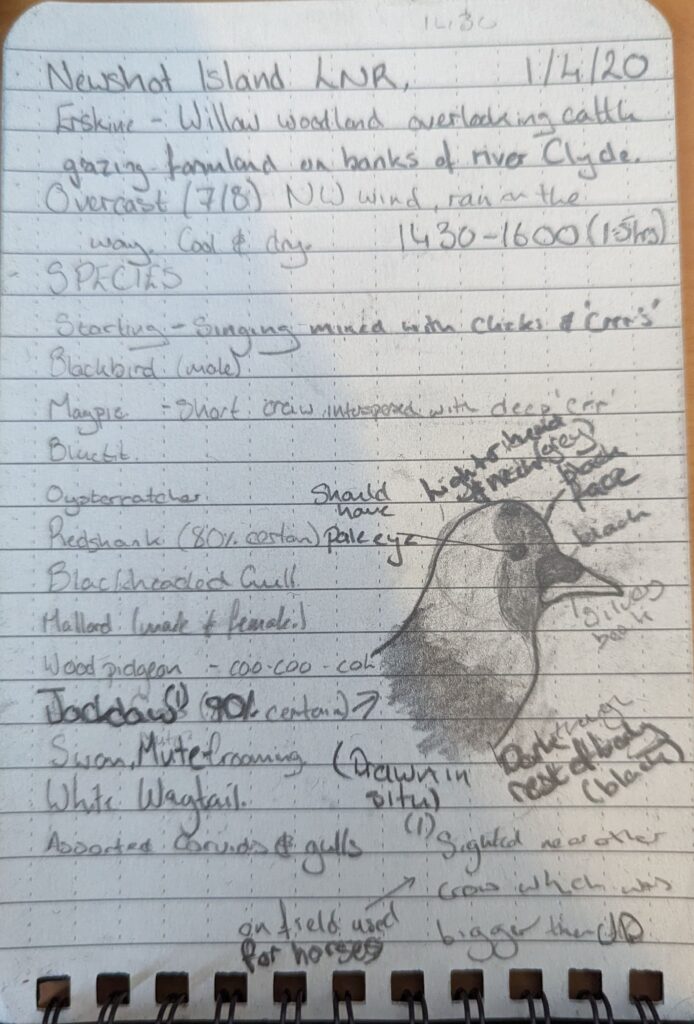
When you find a bird you cannot identify the process that is encouraged is rather than going straight to a book or an app, is to draw and describe your observation into your field notebook to come back to later. This process of recording will force you to make note of the details, the features that immediately stand out while you are looking at the bird, which you can then compare to a field guide. In doing so you have to pay more attention to the bird, rather than trying to match it up with the best fit in your field guide, it also means you can’t get a false positive by assuming features were present just because you have seen them in the book – you can only go off of what you recorded.
We will look later in more detail at how to record visual and audible observations in your field notebook; however this isn’t the only information of value worth noting down: habitat, time of day/year (temporal factors), the environmental conditions (weather, temperature, etc.), how long you spend it the field, where you are. Each of these variables will inform what you are likely to see on a given day. Recording them will help you add into the identification framework information that you can use to diagnose what species you will see and what you can exclude, narrowing down your potential pool of suspects. It is also a nice record to keep as you will have an account of that day out birding, and the observations you made; flicking back through old notebooks and seeing the excited scribbles as you saw an osprey is almost as good as seeing it… almost. If you want, keeping more personal notes about the day is completely appropriate.
You can also include notes from preparations you make before you head out. If you know you are heading into the mountains and want to see a golden eagle, sketching and noting down the key identification features and how to tell it apart from similar species will put that information to the forefront of your mind, and give you a handy list of key points to refer back to as a distant bird dips over the ridge, and you are left pretty sure it was your Golden Eagle, but what was the tail supposed to be like?!
Some of my field notebook entries, notice the range of ‘artistic ability’ demonstrated!
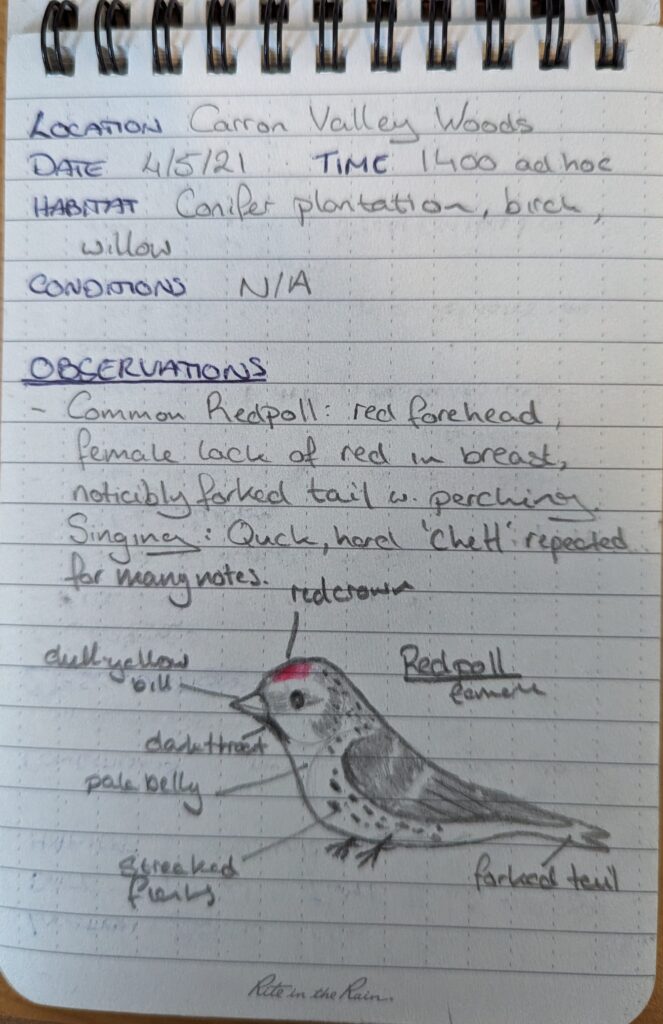
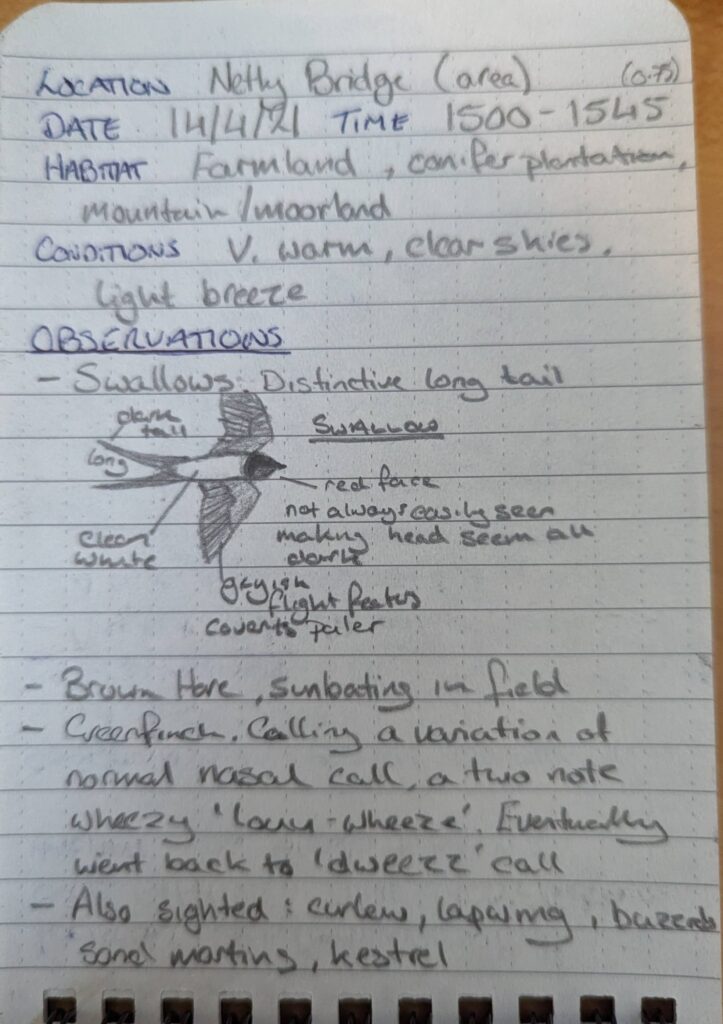
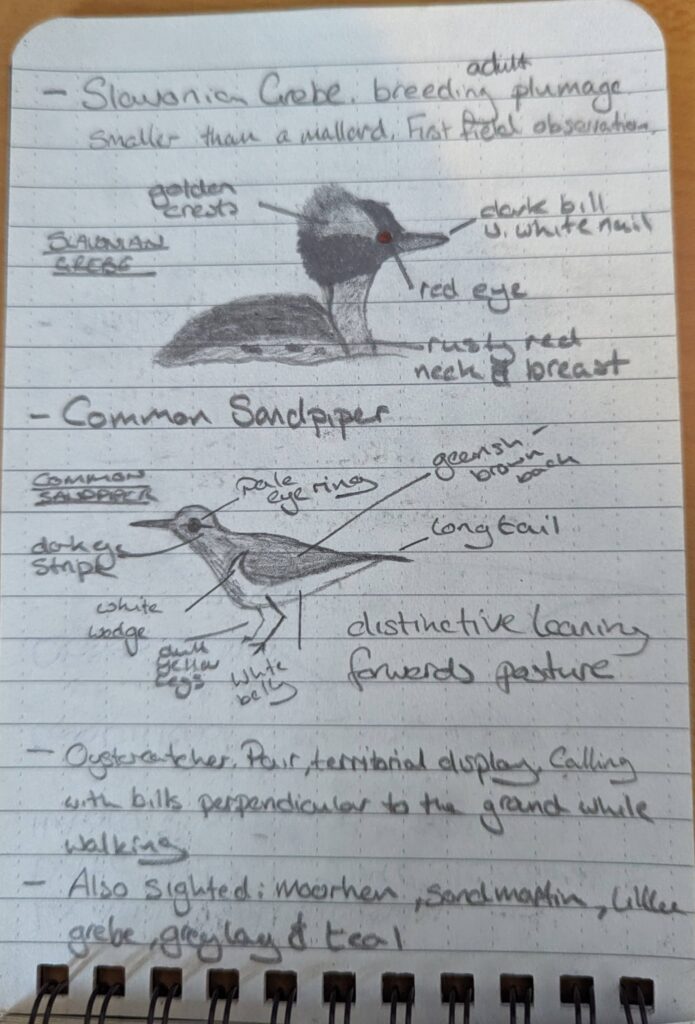
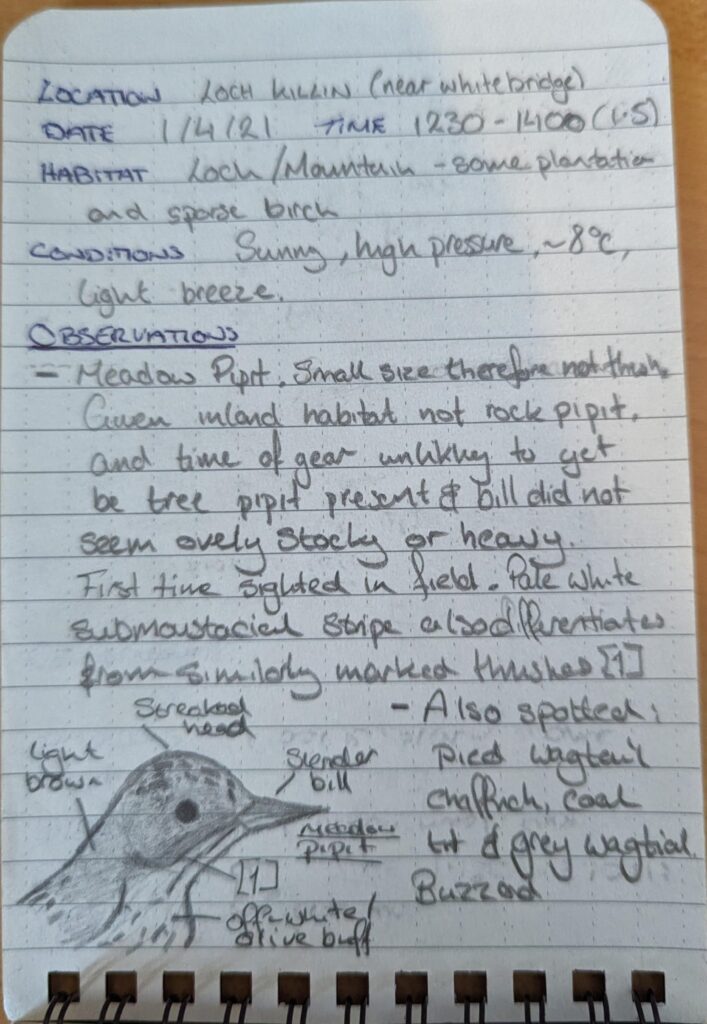
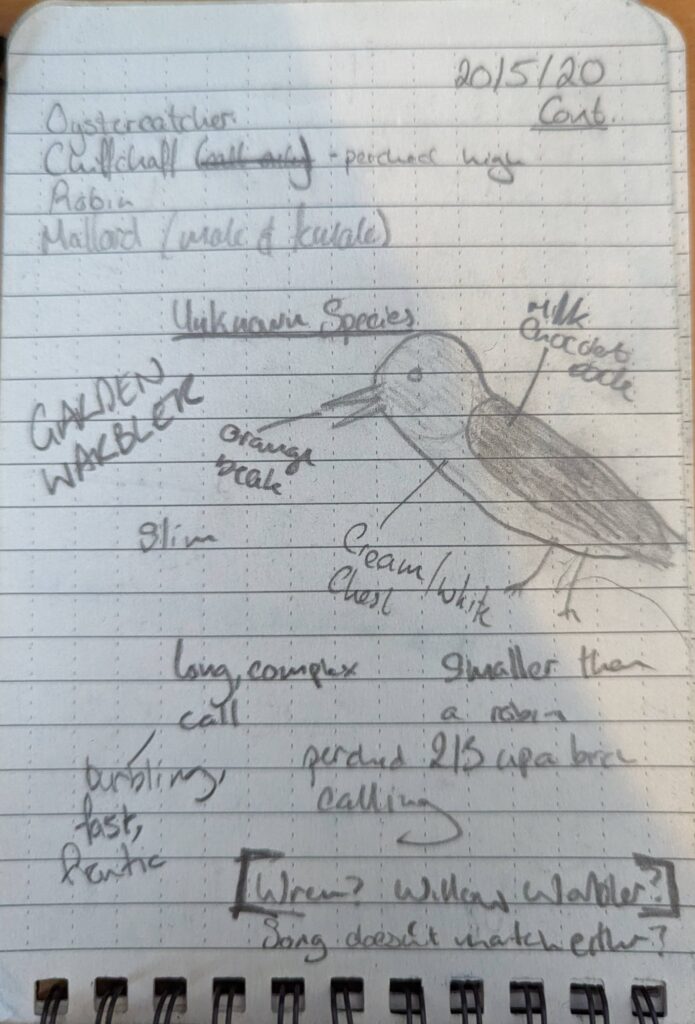
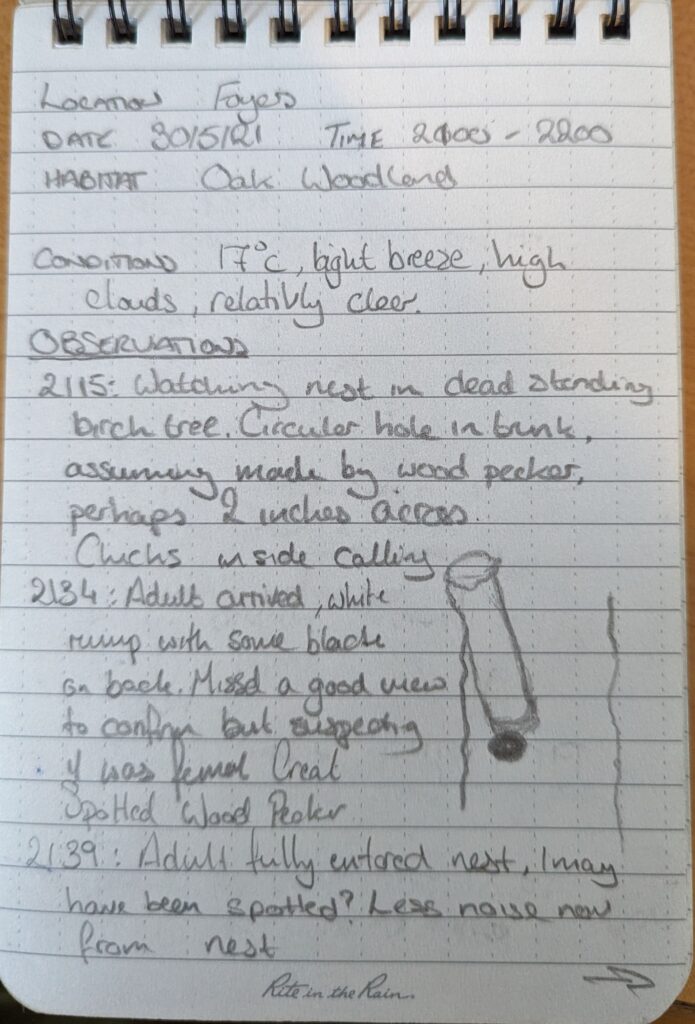
Field notebook key points:
- Annotate your drawings
- Record where you are, the habitat type, what the weather is like
- Remember, your notebook is for you, it doesn’t have to be a work of art!
Local Patch
Find somewhere local you can return to and get to know well. Could be a local park, a favourite walk,, but make sure its somewhere you can access easily and regularly. Some people make their local patch a 5km radius around their address and will make a specific record for that area.
Further Reading
Wild Signs and Star Paths, Tristan Gooley (2018)
Thinking, Fast and Slow, Daniel Kahneman (2011)
Image References
“Mistle Thrush in Greenwich Park” by Keven Law is licenced under CC BY-SA 2.0 DEED