


The UK’s nineteen-thousand-mile coastline boasts some of the worlds most fascinating and enigmatic flora and fauna. Some of the most diverse ecosystems on the globe exists in the intertidal-zone where life has to adapt to the everchanging conditions, weather and extreme seasonal changes. For this reason, the animals we find along the coast are some of the most adaptable, interesting and accessible forms of wildlife that we can easily connect with. No matter your age, you are sure to find creatures which fascinate, perplex and invite further examination, making rockpools an ideal entry point for discussions and learning around coastal morphology, marine biology, coastal ecosystems as well as the various challenges coastal life must overcome in order to occupy this unique niche in our landscapes.
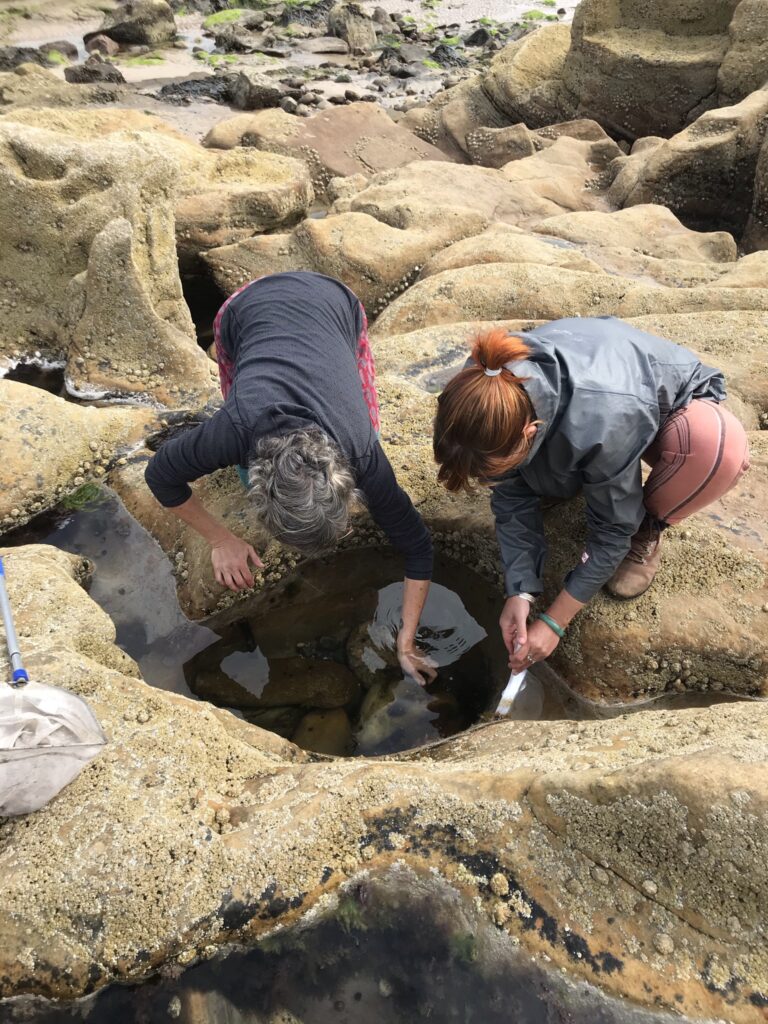
Whilst full of wonder, the exploration of rocky coastlines never the less begs questions about broader marine and ocean ecology, the ecological challenges faced by marine ecosystems and the impacts of climate change, making it the perfect way to engage audiences directly with conservation, ecological awareness and global citizenship.
This course aims to impart knowledge on everything you might need, including:
- How to prepare for a rockpooling excursion, undertaken either by yourself or with others
- The equipment you should bring to keep yourself and others safe whilst on the coast
- How to identify the common inhabitants of rockpools including invertebrates, fish and the signs of coastal mammals.
You will gain:
- The ability to identify and share facts about common animals that can be found in and around rockpools.
- A deeper understanding of the broader ecology, coastal morphology and importance of coastal ecosystems.
- An understanding of the risks and other considerations that should be made before rockpooling.
Course Content

We're grateful to all our funders